
HOME | ABOUT US | OUR SERVICES | ESTATE PLANNING 101 | RESOURCES | CONTACT
Estate Planning Doesn't Have to Be Complicated.
Most people know they should have an estate plan. What isn't always clear is what the different documents do, how they work together, or whether the plan they have will actually work the way they expect.
Estate Planning 101 is designed to make the basics easier to understand, without the legal jargon.
We'll walk you through the important pieces, explain why they matter, and help you understand the questions worth asking as you think about protecting yourself, what you've built, and the people you love.
You don't need to become an estate planning expert. You just need enough clarity to make informed decisions.
Ready to Put Your Estate Plan in Place?
If you already know you want to move forward, you can begin now.
Start With the Big Picture
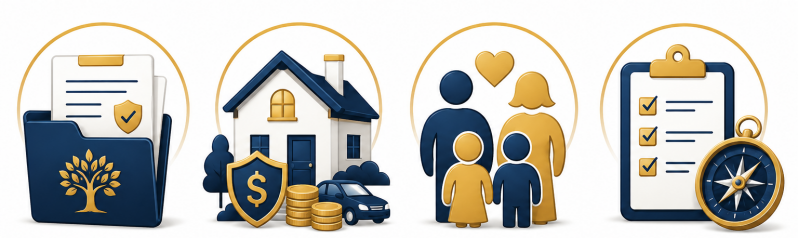
A good estate plan brings several important pieces together. Understanding these four areas makes everything else easier to understand.
YOUR PLAN
The documents that explain who can act for you, how decisions should be made, and where you want your assets to go.
YOUR ASSETS
Your home, bank and investment accounts, insurance, retirement accounts, personal property, and the other things you've built over your lifetime.
YOUR PEOPLE
The people you choose to make decisions, manage your affairs, receive what you leave behind, and carry out your wishes.
YOUR INSTRUCTIONS
The information your family may need to understand what you have, where to find it, and what you want them to do.

Want to See How This Applies to Your Own Life?
Understanding the pieces is one thing. Seeing how they fit together for you and your family is another.
Getting Your Affairs in Order is a practical guide that helps you look at your important documents, accounts, property, beneficiaries, decision-makers, and the information your family may someday need.
Start by understanding what you already have in place and what may deserve a closer look.
A Will
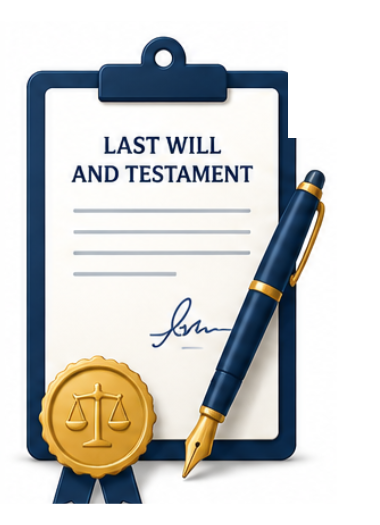
A will provides instructions for what should happen after your death.
It can help you:
- Name the people you want to receive your property.
- Name someone to handle your estate.
- Name guardians for minor children.
- Put your wishes in writing.
An important distinction: A will generally does not avoid probate. Instead, the probate process is typically how the court validates the will and oversees administration of the estate.
A Revocable Living Trust
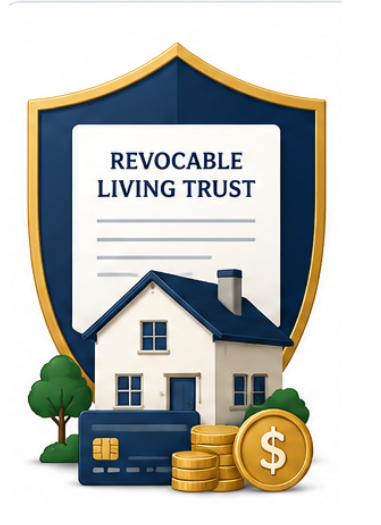
A revocable living trust can hold assets during your lifetime and provide instructions for how those assets should be managed if you become incapacitated and distributed after your death.
When properly established and funded, it can help:
- Keep many trust-owned assets outside of probate.
- Provide for management of trust assets if you become incapacitated.
- Give your successor trustee instructions for managing and distributing trust property.
- Provide greater continuity and privacy for your family.
The important words are “properly funded.” Creating a trust document alone does not automatically place your home, accounts, or other assets into the trust.


What If You Can't Make Decisions for Yourself?
Estate Planning Is Also About Your Lifetime
An estate plan isn't only about what happens after you die. It can also establish who can help manage important decisions if illness, injury, or incapacity leaves you unable to handle them yourself.
A complete plan may address several different responsibilities:
Financial Decisions
A financial power of attorney can authorize someone you choose to handle certain financial matters for you.
Healthcare Decisions
Healthcare planning documents can identify who you want making medical decisions if you cannot communicate those decisions yourself.
Your Wishes
Advance healthcare instructions can help communicate your preferences and give the people you've chosen guidance during difficult circumstances.
Trust Management
If assets are held in a revocable living trust, a properly structured trust can provide for a successor trustee to step in and manage trust assets if you become unable to do so.
Estate planning isn't only about leaving things behind. It's also about deciding who you trust to step in when you need help
A Trust Only Works With What You Put Into It
Creating the Trust Is Only the Beginning
Signing a revocable living trust creates the legal document. But creating the document and funding the trust are two different things.
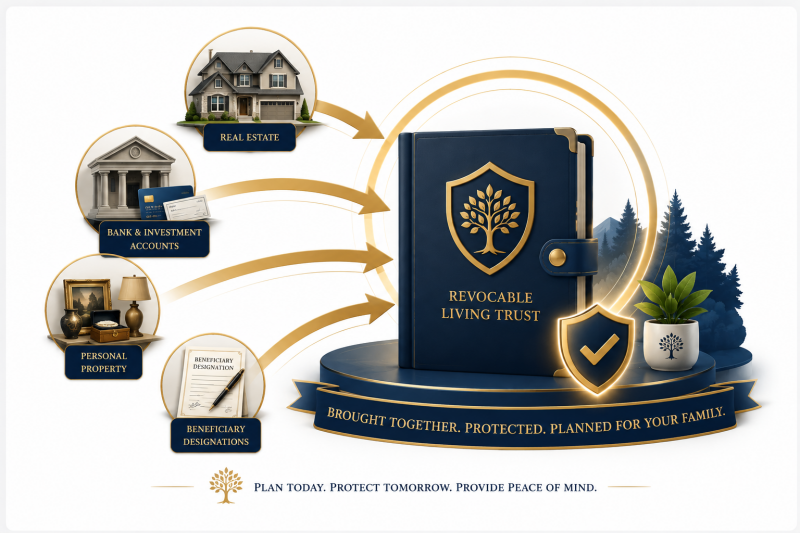
Funding generally means making sure the appropriate assets are owned by the trust, transferred to the trust, or otherwise coordinated with your estate plan as appropriate.
That can include things such as:
Your Home
Real estate may need to be properly titled so it works with the trust.
Bank and Investment Accounts
Some accounts may be titled in the name of the trust, while others may be coordinated through beneficiary designations or other planning decisions.
Personal Property
Certain personal property may be assigned or transferred to the trust as part of the estate-planning process.
Beneficiary Designations
Retirement accounts, life insurance and other beneficiary-designated assets require special consideration. They should not simply be retitled to a trust without considering the legal and tax consequences.
The Binder Isn't the Finish Line
A beautifully prepared trust sitting in a binder may not accomplish what you intended if the assets that should work with it were never properly coordinated.
That's why Claim My Legacy places so much emphasis on helping families understand what happens after the documents are signed.
Documents create the plan. Funding helps put the plan into action.
Your Documents Aren't the Only Instructions That Matter
How an Asset Is Owned Can Change What Happens to It
- An estate plan is more than the documents you sign. The way an asset is titled and whether it has a beneficiary designation can affect where that asset goes when you die.
- Some assets may pass according to your trust. Others may pass directly to a named beneficiary. Still others may be affected by joint ownership or require probate.
- That's why these pieces need to be considered together.
Beneficiary Designations
- Assets such as life insurance, retirement accounts and certain financial accounts may allow you to name beneficiaries.
- Those designations can control who receives the asset, regardless of what your will says.
- They also need to be reviewed as your family and circumstances change.
How Property Is Titled
- Ownership matters too.
- A home or account owned individually may be handled differently from one owned jointly or by a trust.
- Simply having a trust does not automatically mean an asset is owned by the trust.
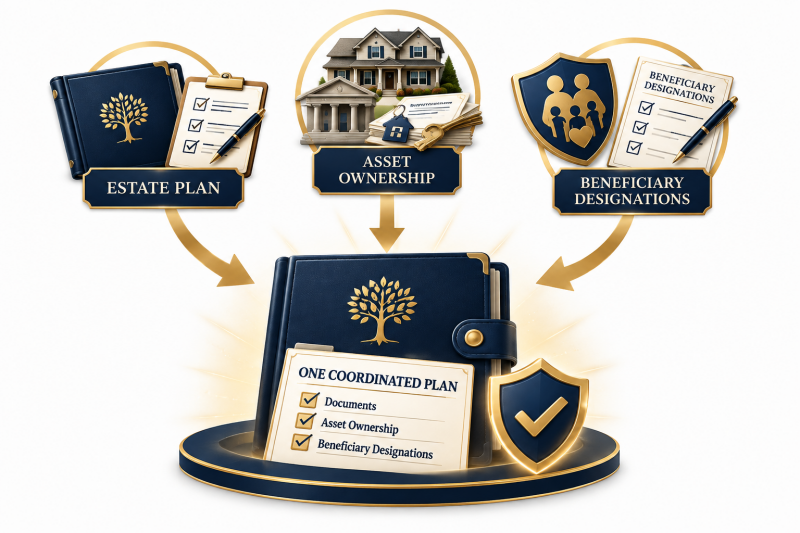
Coordination Is the Key
Your estate planning documents, asset ownership and beneficiary designations should work together rather than give conflicting instructions.
The question isn't only, “What does my estate plan say?” It's also, “How are my assets actually set up?”

Life Changes. Your Estate Plan Should Too.
Your Plan Should Keep Up With Your Life
An estate plan reflects your family, your assets, the people you trust, and the decisions you've made at a particular point in time.
But life doesn't stand still.
As circumstances change, it makes sense to periodically review your plan and ask whether it still reflects what you want today.
When Should You Review Your Estate Plan?
Consider reviewing your plan after significant changes such as:
Marriage or Divorce
Relationships change, and your documents, beneficiaries and decision-makers may need to change with them.
A Birth or Death in the Family
New family members may need to be included, while the death of a beneficiary, trustee, agent or other person named in your plan may require changes.
Buying or Selling Property
A new home, investment property or other significant asset should be considered as part of your overall plan.
Major Financial Changes
Retirement, receiving an inheritance, selling a business or other meaningful financial changes may affect your planning.
Changes in the People You Trust
The person you chose years ago to serve as trustee, financial agent or healthcare decision-maker may no longer be the person you would choose today.
Moving to Another State
Estate-planning laws vary by state. A move is a good reason to have your existing plan reviewed.
Your Estate Plan Is a Living Plan
You don't need to rewrite your estate plan every time something changes.
But you do want to know that the plan you created years ago still reflects the family, assets and wishes you have today.
A good estate plan shouldn't just be right when you sign it. It should stay aligned with your life.
Now Put the Pieces Together
You have just looked at some of the most important parts of estate planning: your documents, your assets, the people you trust, how property is owned, beneficiary designations, trust funding, and keeping your plan current as life changes.
But understanding the pieces is only the beginning.
The next question is:
How do these pieces fit together for you and your family?
That is exactly what the Family Legacy Review™ is designed to help you explore.
Start by Understanding Where You Stand
The complimentary Self-Guided Family Legacy Review™ lets you take a closer look at your family, what you own, what you already have in place, and what may deserve your attention.
Complete it privately, at your own pace.
Prefer to Talk It Through?
A Legacy Specialist can walk through the Family Legacy Review™ with you and help you understand your options.